UCL Student Dylan John on his MSci Research Project with the Sumner Lab
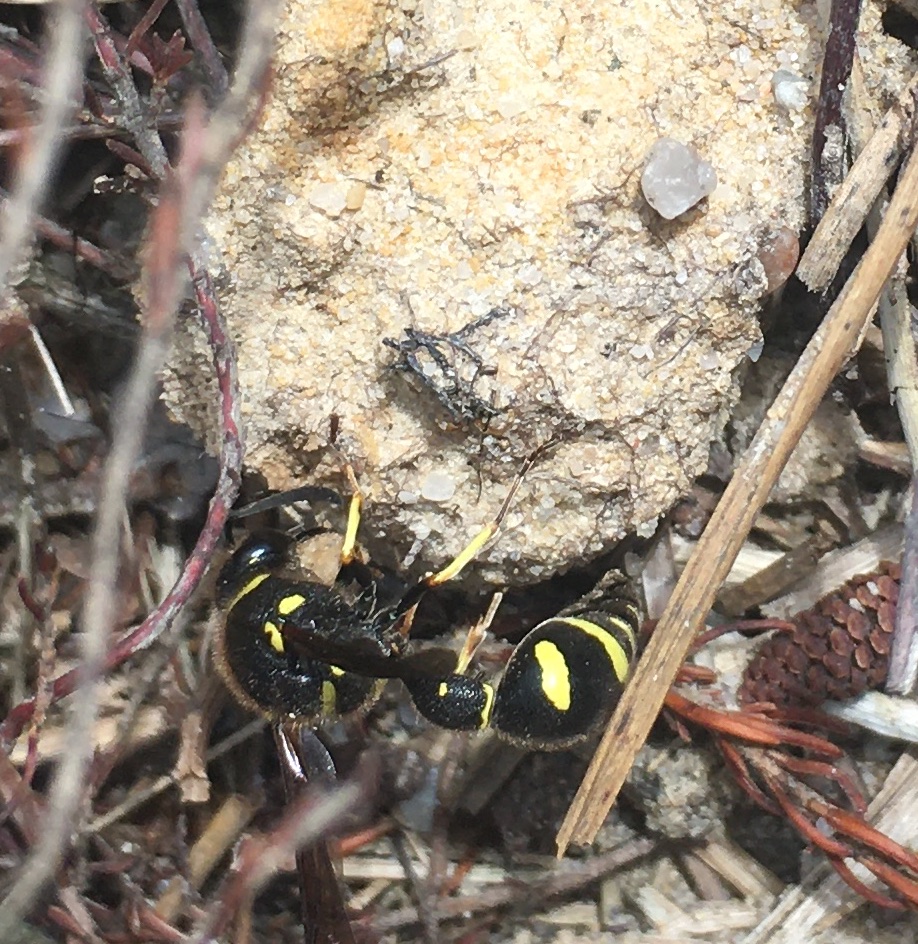
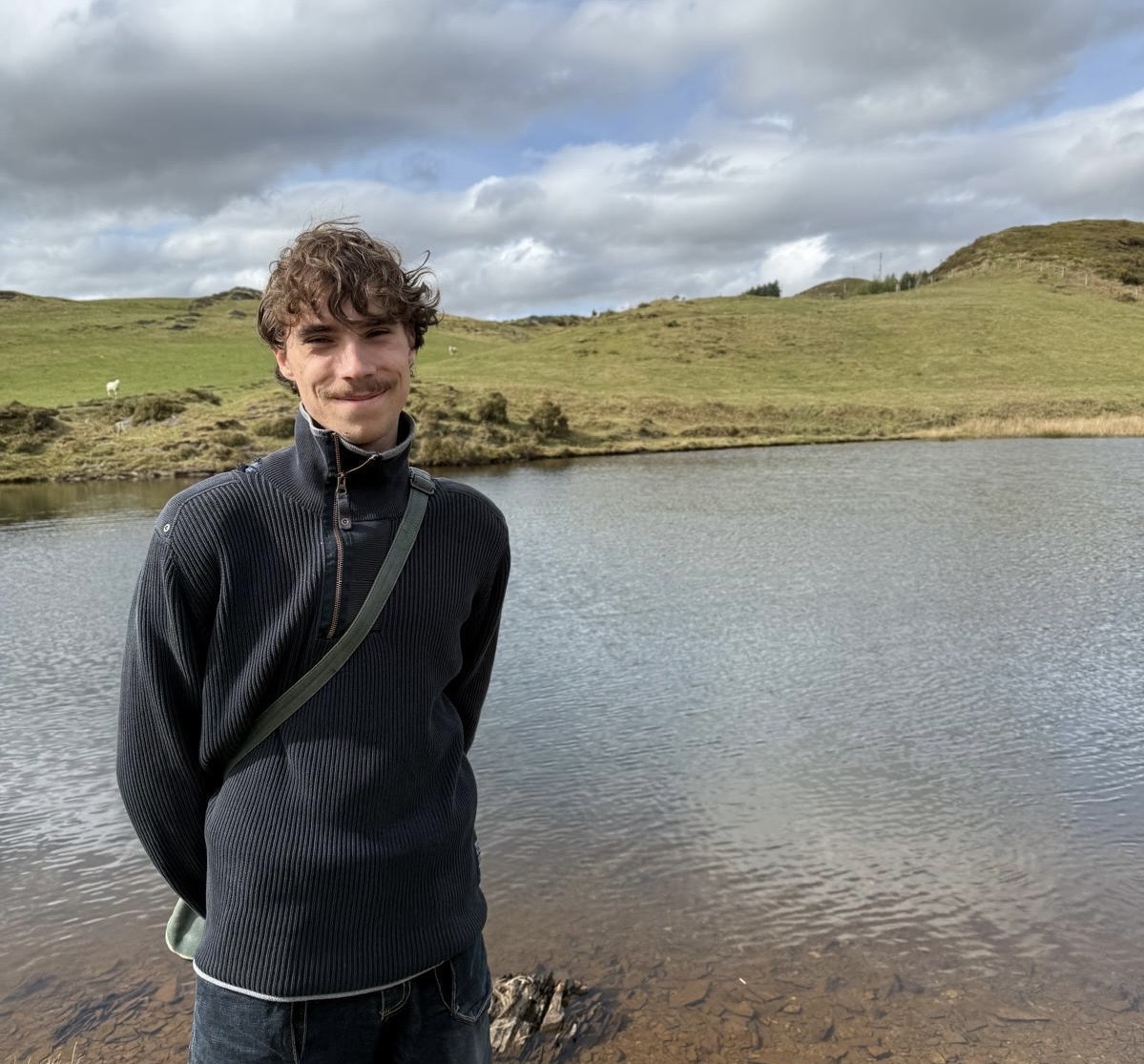
Left: Heath Potter Wasp – Eumenes coarctatus – Dorset, 2021. A solitary potter wasp who provisions her nest with dozens of small caterpillars. Right: MSci student Dylan John, UCL.
The wasp family Vespidae includes the famous yellow jackets that build their large paper fortresses and go about stealing the ham off of your sandwich; but this family is remarkably diverse and exhibits equally diverse nesting and prey-use traits. Across the family, wasp nesting ranges from burrows excavated in soil, to renting pre-existing cavities such as hollow stems, and to constructing free-standing nests made from mud or plant material. Some wasp species are generalist predators, while others are specialists.
For my final year MSci Research Project under the supervision of Prof Seirian Sumner and PhD student Idris Adams, I am investigating the evolution of prey-use and nesting strategies within the vespid subfamily Eumeninae. This involves reviewing literature and compiling a large dataset that captures nesting and prey-use traits, such as nest shape, nest construction material, provisioning mode, and prey identity for as many eumenine wasp species as possible. Another prey-use trait, prey specificity, will be quantified using a phylogenetically informed taxonomic distinctness metric. All nesting and prey traits will then be used for ancestral state reconstruction and to test for correlated evolution of different trait combinations. This will hopefully provide insight into the process of evolution and whether the evolution of a certain nesting character relies on preexisting evolution of a different character; or whether they coevolve for instance.
This project is my first experience of synthesising data from the literature, which comes in all shapes and sizes, such as from tables, figures, and brief natural history observations. I have enjoyed the challenge of figuring out how to standardise this into a dataset fit for analysis. Seirian’s and Idris’ insight has been invaluable, and I am looking forward to being more involved with the Sumner Lab this term!